
pRS shRNA Vector

$670.00
In Stock*
Specifications
Reviews


Documents
| Product Manuals |
| FAQs |
| SDS |
Resources
Citations
Loss of Fbxw7 disrupts lipid homeostasis and autophagy in hepatocellular carcinoma cells
Hayashi, Yamamoto, Murakami
Med Mol Morphol (2026)
Hayashi, Yamamoto, Murakami
Med Mol Morphol (2026)
AI Summary: OriGene's empty pRS vector (TR20003) was used to generate control (mock) Huh-7 cells for experiments investigating the effects of Fbxw7 loss on lipid homeostasis and autophagy in hepatocellular carcinoma cells.
Snippet: Control (mock) Huh‑7 cells were generated by transfecting the empty pRS vector (TR20003;OriGene) without shRNA. All experiments were performed using ten
OPRK1 drives SLC9A3R1 progression to neuroendocrine prostate cancer
Liang, Shen, Zhang et al
Cell Death Dis (2025)
Liang, Shen, Zhang et al
Cell Death Dis (2025)
Cited by 1
AI Summary: OriGene’s pRS shRNA cloning plasmid (TR20003) was used to generate shSLC9A3R1 constructs for gene knockdown experiments, enabling the authors to investigate the role of SLC9A3R1 in neuroendocrine prostate cancer progression.
Snippet: The shSLC9A3R1 sequence (5'—3') is su 499 bcloned into the pRS shRNA cloning plasmid (Origene, TR20003). By inserting the kpn I/ 500 XhoI fragment containing the
EP300-mediated H3 acetylation elevates MTHFD2 expression to reduce mitochondrial dysfunction in lipopolysaccharide-induced tubular epithelial cells
Hu
Ren Fail (2024) 46 (2), 2369342 DOI: 10.1080/0886022X.2024.2369342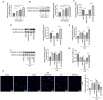
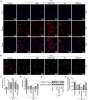
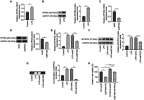
Hu
Ren Fail (2024) 46 (2), 2369342 DOI: 10.1080/0886022X.2024.2369342
AI Summary: OriGene products, including shMTHFD2 (TR707895), MTHFD2 overexpression plasmid (RR209354), pCMV6-Entry vector (PS100001), and pRS vector (TR20003), were used for gene knockdown and overexpression experiments to investigate the roles of MTHFD2 and EP300 in mitochondrial dysfunction during sepsis-induced acute kidney injury.
Snippet: UK) was the internal parameter of mitochondrial protein. Cell transfection Short hairpin RNA against MTHFD2 (shMTHFD2;TR707895) and overexpression plasmids for MTHFD2 (RR209354) were procured from OriGene (Rockville, MD, USA), while short hairpin RNA against EP300 was customized by GenePhrama (Suzhou, China). pCMV6-Entry vectors (NC;PS100001, OriGene, USA) and pRS vectors (shNC;TR20003, OriGe
Knockdown of liver cancer cell‐secreted exosomal PSMA5 controls macrophage polarization to restrain cancer progression by blocking JAK2/STAT3 signaling
Xie, Li, Yan et al
Immun Inflamm Dis (2024) 12 (2), e1146 DOI: 10.1002/iid3.1146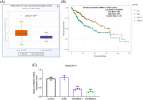
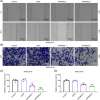
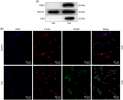
Xie, Li, Yan et al
Immun Inflamm Dis (2024) 12 (2), e1146 DOI: 10.1002/iid3.1146
Cited by 16
AI Summary: In this study, OriGene's shPSMA5 (shPSMA5-1/−2) and pRS shRNA vectors (TR20003) were used to knock down PSMA5 expression in liver cancer cells, enabling the authors to demonstrate that reducing exosomal PSMA5 inhibits macrophage M2 polarization and thereby suppresses cancer progression via the JAK2/STAT3 signaling pathway.
Snippet: … pRS shRNA vectors (TR20003;OriGene) served as the negative control (shNC) of shPSMA5;IntroductionTumor‐associated macrophages, a major component of the tumor microenvironment, undergo polarization into M2 macrophages (M2), and thereby exert an immunosuppressive effect to induce cancer metastasis. …
Botulinum toxin type A ameliorates rat dorsal root ganglia neuron pyroptosis in postherpetic neuralgia by upregulating cathelicidin antimicrobial peptide to inhibit neutrophil elastase
Wan
Chem Biol Drug Des (2023)
Wan
Chem Biol Drug Des (2023)
Cited by 3
AI Summary: OriGene products, specifically the RNA against ELANE (ShELANE, TR705341) and the pRS shRNA Vector (ShNC, TR20003), were used in this study to transfect dorsal root ganglia neurons and investigate the molecular mechanisms underlying botulinum toxin type A's effects in postherpetic neuralgia.
Suppressed ZNF816 expression enhance keratinocyte growth and reduce apoptosis by activating the AKT signaling pathway
Yin, Yuan, Ni et al
Research Square (2023)
Yin, Yuan, Ni et al
Research Square (2023)
Showing 1-6 of 31 papers.
Powered by BizGenius
*Delivery time may vary from web posted schedule. Occasional delays may occur due to unforeseen
complexities in the preparation of your product. International customers may expect an additional 1-2 weeks
in shipping.
Related Products
- Price:
- Actual Price:
Welcome to OriGene AI!
I'm your AI-powered guide to everything OriGene.
Ask me anything:
- Product specs
- Ordering help
- Technical questions
- How to find exactly what your experiment needs
Prefer a live agent? Connect with us by clicking the green chat icon, as seen in the image below or email our team at custsupport@origene.com.
