
Gapdh (NM_008084) Mouse Recombinant Protein
SKU
TP504934
Purified recombinant protein of Mouse glyceraldehyde-3-phosphate dehydrogenase (Gapdh), with C-terminal MYC/DDK tag, expressed in HEK293T cells, 20ug

$1,020.00
In Stock*
Specifications
| Product Data | |
| Species | Mouse |
|---|---|
| Expression Host | HEK293 |
| Expression cDNA Clone or AA Sequence | |
| Tag | C-MYC/DDK |
| Predicted MW | 35.8 kDa |
| Concentration | >0.05 µg/µL as determined by microplate BCA method |
| Purity | > 80% as determined by SDS-PAGE and Coomassie blue staining |
| Buffer | 25 mM Tris-HCl, 100 mM glycine, pH 7.3, 10% glycerol |
| Note | For testing in cell culture applications, please filter before use. Note that you may experience some loss of protein during the filtration process. |
| Storage | Store at -80°C after receiving vials. |
| Stability | Stable for 12 months from the date of receipt of the product under proper storage and handling conditions. Avoid repeated freeze-thaw cycles. |
| Shipping | Dry Ice |
| Reference Data | |
| RefSeq | NP_032110 |
| Locus ID | 14433 |
| UniProt ID | P16858 |
| Cytogenetics | 6 59.32 cM |
| RefSeq Size | 1444 |
| RefSeq ORF | 999 |
| Synonyms | Ga; Gapd |
| Summary | This gene encodes a member of the glyceraldehyde-3-phosphate dehydrogenase protein family. The encoded protein has been identified as a moonlighting protein based on its ability to perform mechanistically distinct functions. The encoded protein was originally identified as a key glycolytic enzyme that converts D-glyceraldehyde 3-phosphate (G3P) into 3-phospho-D-glyceroyl phosphate. Subsequent studies have assigned a variety of additional functions to the protein including nitrosylation of nuclear proteins, the regulation of mRNA stability, and acting as a transferrin receptor on the cell surface of macrophage. Alternative splicing results in multiple transcript variants. Many pseudogenes similar to this locus are found throughout the mouse genome. provided by RefSeq, Jan 2014 |
| Protein Categories | Cytokines, Intracellular Proteins |
Reviews


Documents
| FAQs |
| SDS |
Resources
| Recombinant Protein Resources |
Citations
β-Endorphin Mediates the Development and Instability of Atherosclerotic Plaques
Okano, Sato, Shirai et al
Int J Endocrinol (2020) 2020, 4139093 DOI: 10.1155/2020/4139093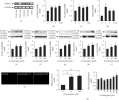
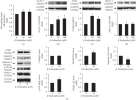
Okano, Sato, Shirai et al
Int J Endocrinol (2020) 2020, 4139093 DOI: 10.1155/2020/4139093
Cited by 15
AI Summary: In this study, OriGene’s anti-OPRM1 antibody (TA326433) was used to detect μ-opioid receptor expression, contributing to the investigation of β-endorphin’s role in atherosclerosis development and plaque instability.
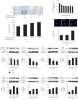
Expression of the prosurvival kinase HCK requires PAX5 and mutated MYD88 signaling in MYD88-driven B-cell lymphomas
Liu, Chen, Munshi et al
Blood Adv (2020) 4 (1), 141-153 DOI: 10.1182/bloodadvances.2019000947
Liu, Chen, Munshi et al
Blood Adv (2020) 4 (1), 141-153 DOI: 10.1182/bloodadvances.2019000947
Cited by 25
AI Summary: OriGene’s GAPDH antibody was used as a control in chromatin immunoprecipitation (ChIP) experiments to validate the specificity of transcription factor binding in this study.
Snippet: DNA-bound protein was immunoprecipitated using ChIP-grade antibodies for c-Jun, JunB, STAT3 (Cell Signaling Technology, Danvers, MA), NF-κB-p65 (Abcam, Cambridge, MA), or glyceraldehyde-3-phosphate dehydrogenase (GAPDH;OriGene Technologies, Rockville, MD
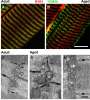
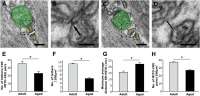
Age-dependent uncoupling of mitochondria from Ca2⁺ release units in skeletal muscle
Pietrangelo, D'Incecco, Ainbinder et al
Oncotarget (2015) 6 (34), 35358-71 DOI: 10.18632/oncotarget.6139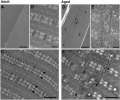
Pietrangelo, D'Incecco, Ainbinder et al
Oncotarget (2015) 6 (34), 35358-71 DOI: 10.18632/oncotarget.6139
Cited by 105
AI Summary: In this study, OriGene products including anti-SOD1 (TA802115), anti-SOD2 (TA326251), and anti-3-nitrotyrosine (TA506423) antibodies were used to assess oxidative stress markers in skeletal muscle tissues, contributing to the finding that oxidative stress increases with age in association with altered mitochondrial and calcium release unit coupling.
Showing 1-3 of 3 papers.
Powered by BizGenius
*Delivery time may vary from web posted schedule. Occasional delays may occur due to unforeseen
complexities in the preparation of your product. International customers may expect an additional 1-2 weeks
in shipping.
Related Products
- Price:
- Actual Price:
Welcome to OriGene AI!
I'm your AI-powered guide to everything OriGene.
Ask me anything:
- Product specs
- Ordering help
- Technical questions
- How to find exactly what your experiment needs
Prefer a live agent? Connect with us by clicking the green chat icon, as seen in the image below or email our team at custsupport@origene.com.
