



 Germany
 Japan
Japan
 United Kingdom
 China
China
pCMV6-AN-mGFP Mammalian Expression Vector
CAT#: PS100048
pCMV6-AN-mGFP, mammalian vector with N-terminal mGFP, 10ug
USD 650.00
In Stock*
Size
Product Images
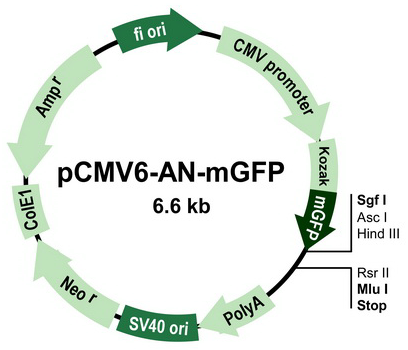
Frequently bought together (2)
Specifications
| Product Data | |
| N-Tag | mGFP |
| E. coli Selection | Ampicillin (100 ug/mL) |
| Mammalian Cell Selection | Neomycin |
| Features |
|
| Download Vector Sequence | |
| Schematic of the multiple cloning sites |
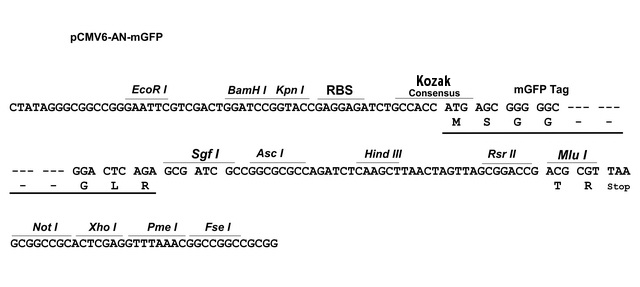
|
Documents
| Product Manuals |
| FAQs |
| SDS |
Resources
{0} Product Review(s)
0 Product Review(s)
Submit review
Be the first one to submit a review
Product Citations
*Delivery time may vary from web posted schedule. Occasional delays may occur due to unforeseen
complexities in the preparation of your product. International customers may expect an additional 1-2 weeks
in shipping.