
p16INK4A (CDKN2A) Mouse Monoclonal Antibody (Biotin conjugated) [Clone ID: OTI4C11]


$509.00
5 Days*
Specifications
| Product Data | |
| Clone Name | OTI4C11 |
|---|---|
| Application | IF, IHC, WB |
| Recommended Dilution | WB 1:1000, IF 1:100, IHC 1:150 |
| Reactivity | Human |
| Antibody Host | Mouse |
| Isotype | IgG1 |
| Clonality | Monoclonal |
| Immunogen | Full length human recombinant protein of human CDKN2A (NP_000068) produced in E.coli. |
| Concentration | 0.5 mg/ml |
| Purification | Purified from mouse ascites fluids or tissue culture supernatant by affinity chromatography (protein A/G) |
| Conjugation | Biotin |
| Storage | Store at -20°C as received. |
| Stability | Stable for 12 months from date of receipt. |
| Shipping | Blue Ice |
| Predicted Protein Size | 16.4 kDa |
| Gene Name | cyclin dependent kinase inhibitor 2A |
| Database Link | |
| Background | P16 gene generates several transcript variants which differ in their first exons. At least three alternatively spliced variants encoding distinct proteins have been reported, two of which encode structurally related isoforms known to function as inhibitors of CDK4 kinase. The remaining transcript includes an alternate first exon located 20 Kb upstream of the remainder of the gene; this transcript contains an alternate open reading frame (ARF) that specifies a protein which is structurally unrelated to the products of the other variants. This ARF product functions as a stabilizer of the tumor suppressor protein p53 as it can interact with, and sequester, MDM1, a protein responsible for the degradation of p53. In spite of the structural and functional differences, the CDK inhibitor isoforms and the ARF product encoded by this gene, through the regulatory roles of CDK4 and p53 in cell cycle G1 progression, share a common functionality in cell cycle G1 control. This gene is frequently mutated or deleted in a wide variety of tumors, and is known to be an important tumor suppressor gene. |
| Synonyms | ARF; CDK4I; CDKN2; CMM2; INK4; INK4A; MLM; MTS-1; MTS1; P14; P14ARF; P16; P16-INK4A; P16INK4 |
| Reference Data | |
| Protein Families | Druggable Genome |
| Protein Pathways | Bladder cancer, Cell cycle, Chronic myeloid leukemia, Glioma, Melanoma, Non-small cell lung cancer, p53 signaling pathway, Pancreatic cancer, Pathways in cancer |
Reviews


Documents
| Product Manuals |
| FAQs |
| SDS |
Resources
Other "OTI4C11" antibodies (4)
| SKU | Description | Size | Price | |
|---|---|---|---|---|
| CF500036 | Carrier-free (BSA/glycerol-free) P16 mouse monoclonal antibody, clone OTI4C11 (formerly 4C11) | 100 ug |
$620.00
|
|
| TA500036 | Anti-CDKN2A (p16INK4a) mouse monoclonal antibody, clone OTI4C11 (formerly 4C11) | 100 ul |
$447.00
|
|
| TA500036BM | P16 mouse monoclonal antibody, clone 4C11, HRP conjugated | 100 ul |
$509.00
|
|
| TA500036S | Anti-CDKN2A (p16INK4a) mouse monoclonal antibody, clone OTI4C11 (formerly 4C11) | 30 ul |
$200.00
|
|
Citations
Miniaturized Drug Discovery Assays Targeting Macrophages in Fibrotic Diseases
Groetzner
Thesis (2024)
Groetzner
Thesis (2024)
Snippet: Anti-α-Tubulin, Alexa Fluor 488 conjugated 53-4502-82 Invitrogen 1:100 CD47 MA5-11895 Invitrogen 1:100 p16 CF500036 OriGene 1:100 p21 MA5-14949 Invitrogen 1:100 Anti-Mouse IgG, Alexa Fluor 488 conjugated A-11029 Invitrogen 1:1000 Anti-Rabbit IgG, Alexa Fluor 546 conjugated A-11010 Invitrogen 1:1000
Silencing p53 inhibits interleukin 10-induced activated hepatic stellate cell senescence and fibrotic degradation in vivo
Guo, Chen, Chen et al
Exp Biol Med (Maywood) (2020)
Guo, Chen, Chen et al
Exp Biol Med (Maywood) (2020)
Cited by 19
AI Summary: OriGene’s P16 antibody was used to assess senescence-related protein expression in hepatic stellate cells, helping to elucidate the role of p53 in IL-10-induced anti-fibrotic effects in this study.
Snippet: Ltd, China);fluorescent anti-quenching agent (Invitrogen, United States);Hyaluronic Acid Detection Kit (Zhengzhou Autobio Engineering Co., Ltd, China). Antibodies were used in these experiments: HMGA1, P53, P27 (Cell Signaling Technology Company, United States);P21 (109199) and α-smooth muscle actin (α-SMA) (ab32575) (Abcam Company, Hong Kong, China);β-actin (Sigma, United States), P16 (OriGene, C...
M2 macrophages reduce the radiosensitivity of head and neck cancer by releasing HB‑EGF
Fu, Liu, Yu et al
Oncol Rep (2020) 44 (2), 698-710 DOI: 10.3892/or.2020.7628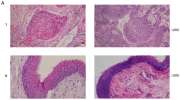
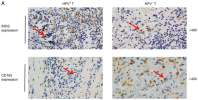
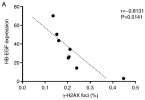
Fu, Liu, Yu et al
Oncol Rep (2020) 44 (2), 698-710 DOI: 10.3892/or.2020.7628
Cited by 39
AI Summary: In this study, OriGene’s HB-EGF overexpression plasmid (HG10082-UT) and HB-EGF shRNA plasmid (TG311253) were used to manipulate HB-EGF expression in HNSCC cells, enabling the authors to demonstrate that HB-EGF secreted by M2 macrophages reduces the radiosensitivity of head and neck cancer cells.
M2 macrophages reduce the radiosensitivity of head and neck cancer by releasing HB‑EGF
Fu, Liu, Yu et al
Oncol Rep (2020)
Fu, Liu, Yu et al
Oncol Rep (2020)
Cited by 39
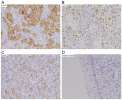
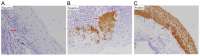
Predictive value of p16INK4a, Ki-67 and ProExC immuno-qualitative features in LSIL progression into HSIL
Ding, Song, Zhao et al
Exp Ther Med (2020) 19 (4), 2457-2466 DOI: 10.3892/etm.2020.8496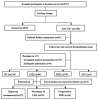
Ding, Song, Zhao et al
Exp Ther Med (2020) 19 (4), 2457-2466 DOI: 10.3892/etm.2020.8496
Cited by 17
AI Summary: In this study, OriGene's ProExC immunohistochemical cocktail was used to assess protein expression in LSIL patient biopsies, contributing to the finding that ProExC expression is an independent risk factor for LSIL progression into HSIL.
Predictive value of p16INK4a, Ki‑67 and ProExC immuno‑qualitative features in LSIL progression into HSIL
Ding, Song, Zhao et al
Exp Ther Med (2020) 19 (4), 2457-2466 DOI: 10.3892/etm.2020.8496
Ding, Song, Zhao et al
Exp Ther Med (2020) 19 (4), 2457-2466 DOI: 10.3892/etm.2020.8496
Cited by 17
AI Summary: In this study, OriGene products—including normal goat serum (used for blocking, ZSGB‑BIO; OriGene Technologies, Inc.) and monoclonal mouse anti‑Ki‑67 antibody (cat. no. TA500036; OriGene Technologies, Inc.)—were utilized in the immunohistochemical analysis to assess the expression of key biomarkers predicting the progression of LSIL to HSIL.
Snippet: The sections were blocked with 10% normal goat serum (ZSGB‑BIO;OriGene Technologies, Inc.) for 10 min at room temperature followed Page 3 no. TA500036;OriGene Technologies, Inc.), monoclonal mouse anti‑Ki‑67 (1:100;cat. no
Showing 1-6 of 14 papers.
Powered by BizGenius
*Delivery time may vary from web posted schedule. Occasional delays may occur due to unforeseen
complexities in the preparation of your product. International customers may expect an additional 1-2 weeks
in shipping.
Related Products
- Price:
- Actual Price:
Welcome to OriGene AI!
I'm your AI-powered guide to everything OriGene.
Ask me anything:
- Product specs
- Ordering help
- Technical questions
- How to find exactly what your experiment needs
Prefer a live agent? Connect with us by clicking the green chat icon, as seen in the image below or email our team at custsupport@origene.com.
