



 Germany
 Japan
Japan
 United Kingdom
 China
China
Antibodies
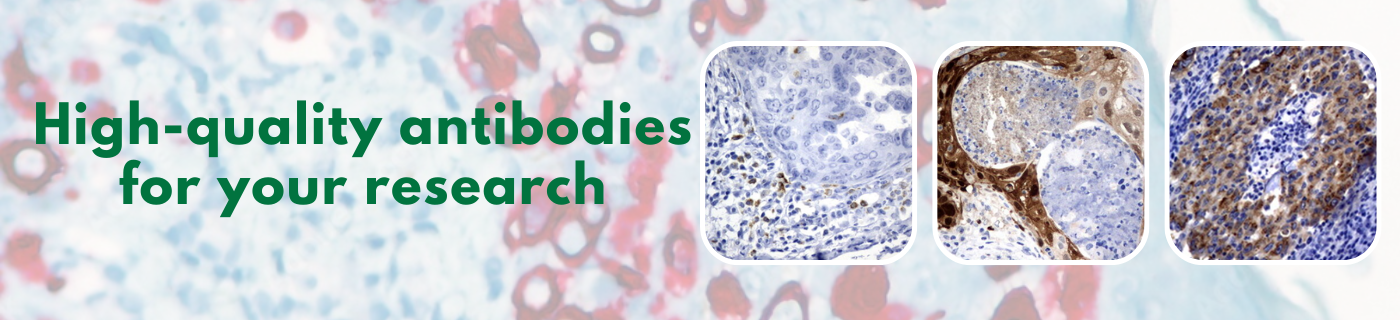
With a collection of over 100,000 primary antibodies and commonly used secondary and tag antibodies, OriGene offers an extensive range of antibodies from various species. We use advanced technologies to generate better antigens and validate the antibodies through multiple applications and protein samples. Our premium antibody brands include TrueMAB®, UltraMAB®, and TrueRAB™.
Our Antibodies
UltraMAB®

The Ultra Specific Antibodies Specificity tested by High-Density Protein Microarray Designed for anatomic pathology Focused on cancer research and diagnostics
TrueMAB®

Mouse Monoclonal Antibodies Full-length human proteins as antigens Recognize native epitopes of target proteins Extensive validations for WB, IHC, IF/ICC, IP, ELISA & Flow
TrueRAB™

Rabbit Monoclonal antibodies Higher sensitivity comparing to other species Smaller antigen for the accurate epitope mapping Extensive validations for WB, IHC, IF/ICC, IP, ELISA & Flow
Specificity Validation Of OriGene Antibodies
Specificity is one of the most important attributes of antibodies. At OriGene, we have been working hard to validate specificities of our antibodies.
Validation Methods
- Predicted band detected in Western blot analysis
- Independent antibody strategies
- 10k protein chip
- Western blot using Knockout cell lysates
Example Data
Specificity Validation for OriGene antibody Cat. No. UM500036
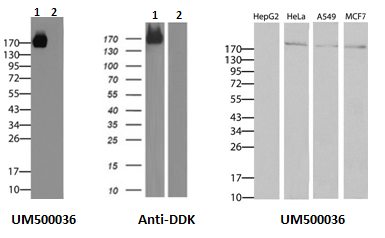
Figure 1. Specificity validation of anti-Her2 antibody (Cat. No. UM500036) using human Her2 overexpression cell lysates and endogenous cell line lysates. UM500036 can recognize the specific Her2 protein at predicted size (~140KDa) in overexpression cell ysate (lane 1 ) and endogenous lysates prepared from Hela, A549 and MCF7 cell lines. The specificity is further proved by using an independent antibody (anti-DDK antibody in the middle) against the same recombinant overexpressed Her2 protein.
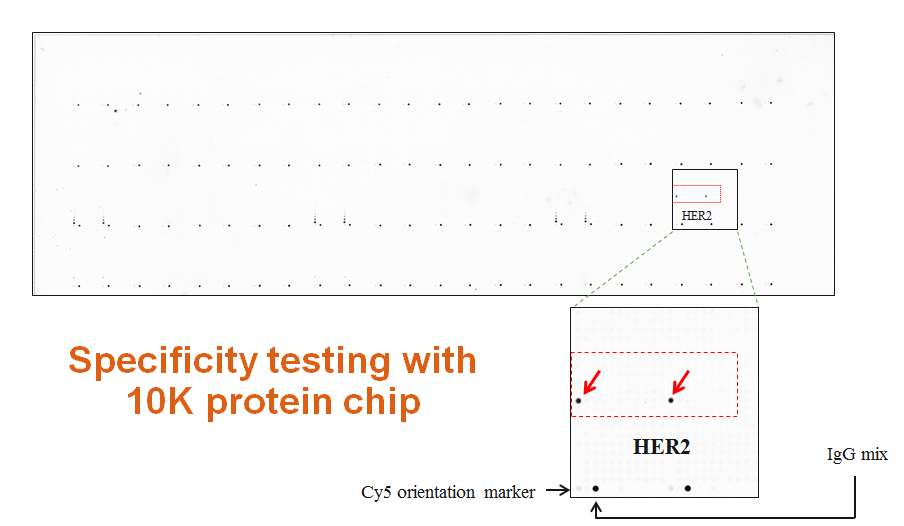
Figure 2. Specificity validation of anti-Her2 antibody (Cat. No. UM500036) using 10k protein chip technology. UM500036 shows no cross-reactivity with other protein on the tested protein microarray containing >10,000 overexpression lysates for different human proteins.
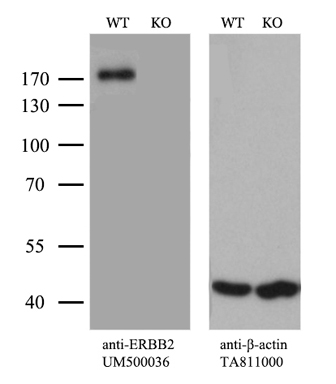
Figure 3. Specificity validation of anti-Her2 antibody (Cat. No. UM500036) using Her2 knockout
cell lysate. UM500036 recognizes the specific Her2 protein at correct size in wild type Hela cell lysate
(WT lane), and shows cross-reactivity with any other protein in the double knockout cell lysates (KO lane).
WT: parental wild type Hela cell lysate
KO: Her2 double knockout Hela cell lysate
Recent Citations using our Antibodies
|
1. Saikosaponin A protects against uremic toxin indole‑3 acetic acid‑induced damage to the myocardium Published in Molecular Medicine Reports, 2023 Sep, using TA130015 |
PubMed: 37417356 |
|
2. Targeting ANXA7/LAMP5-mTOR axis attenuates spinal cord injury by inhibiting neuronal apoptosis via enhancing autophagy in mice Published in Cell Death Discovery, 2023 Aug, using R1107 |
PubMed: 37620352 |
|
3. A pH‑responsive hyaluronic acid nano‑vehicle co‑encapsulating doxorubicin and all‑trans retinoic acid for the inhibition of hepatic stellate cell‑induced tumor growth and metastasis Published in Molecular Medicine Reports, 2023 Aug, using TA130015 |
PubMed: 37326031 |