



 Germany
 Japan
Japan
 United Kingdom
 China
China
QARS1 (NM_005051) Human Mass Spec Standard
CAT#: PH301784
QARS MS Standard C13 and N15-labeled recombinant protein (NP_005042)
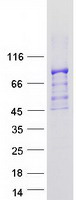
Product Images
Specifications
| Product Data | |
| Tag | C-Myc/DDK |
| Species | Human |
| Expression Host | HEK293 |
| Expression cDNA Clone or AA Sequence | RC201784 |
| Predicted MW | 87.8 kDa |
| Protein Sequence |
>RC201784 protein sequence
Red=Cloning site Green=Tags(s) MAALDSLSLFTSLGLSEQKARETLKNSALSAQLREAATQAQQTLGSTIDKATGILLYGLASRLRDTRRLS FLVSYIASKKIHTEPQLSAALEYVRSHPLDPIDTVDFERECGVGVIVTPEQIEEAVEAAINRHRPQLLVE RYHFNMGLLMGEARAVLKWADGKMIKNEVDMQVLHLLGPKLEADLEKKFKVAKARLEETDRRTAKDVVEN GETADQTLSLMEQLRGEALKFHKPGENYKTPGYVVTPHTMNLLKQHLEITGGQVRTRFPPEPNGILHIGH AKAINFNFGYAKANNGICFLRFDDTNPEKEEAKFFTAICDMVAWLGYTPYKVTYASDYFDQLYAWAVELI RRGLAYVCHQRGEELKGHNTLPSPWRDRPMEESLLLFEAMRKGKFSEGEATLRMKLVMEDGKMDPVAYRV KYTPHHRTGDKWCIYPTYDYTHCLCDSIEHITHSLCTKEFQARRSSYFWLCNALDVYCPVQWEYGRLNLH YAVVSKRKILQLVATGAVRDWDDPRLFTLTALRRRGFPPEAINNFCARVGVTVAQTTMEPHLLEACVRDV LNDTAPRAMAVLESLRVIITNFPAAKSLDIQVPNFPADETKGFHQVPFAPIVFIERTDFKEEPEPGFKRL AWGQPVGLRHTGYVIELQHVVKGPSGCVESLEVTCRRADAGEKPKAFIHWVSQPLMCEVRLYERLFQHKN PEDPTEVPGGFLSDLNLASLHVVDAALVDCSVALAKPFDKFQFERLGYFSVDPDSHQGKLVFNRTVTLKE DPGKV TRTRPLEQKLISEEDLAANDILDYKDDDDKV |
| Purity | > 80% as determined by SDS-PAGE and Coomassie blue staining |
| Concentration | >0.05 µg/µL as determined by microplate BCA method |
| Labeling Method | Labeled with [U- 13C6, 15N4]-L-Arginine and [U- 13C6, 15N2]-L-Lysine |
| Buffer | 25 mM Tris-HCl, 100 mM glycine, pH 7.3 |
| Storage | Store at -80°C. Avoid repeated freeze-thaw cycles. |
| Stability | Stable for 3 months from receipt of products under proper storage and handling conditions. |
| Reference Data | |
| RefSeq | NP_005042 |
| RefSeq Size | 2843 |
| RefSeq ORF | 2325 |
| Synonyms | GLNRS; MSCCA; PRO2195; QARS |
| Locus ID | 5859 |
| UniProt ID | P47897, B7Z840 |
| Cytogenetics | 3p21.31 |
| Summary | Aminoacyl-tRNA synthetases catalyze the aminoacylation of tRNA by their cognate amino acid. Because of their central role in linking amino acids with nucleotide triplets contained in tRNAs, aminoacyl-tRNA synthetases are thought to be among the first proteins that appeared in evolution. In metazoans, 9 aminoacyl-tRNA synthetases specific for glutamine (gln), glutamic acid (glu), and 7 other amino acids are associated within a multienzyme complex. Although present in eukaryotes, glutaminyl-tRNA synthetase (QARS) is absent from many prokaryotes, mitochondria, and chloroplasts, in which Gln-tRNA(Gln) is formed by transamidation of the misacylated Glu-tRNA(Gln). Glutaminyl-tRNA synthetase belongs to the class-I aminoacyl-tRNA synthetase family. Alternative splicing results in multiple transcript variants. [provided by RefSeq, Jan 2013] |
| Protein Families | Druggable Genome |
| Protein Pathways | Aminoacyl-tRNA biosynthesis, Metabolic pathways |
Documents
| FAQs |
| SDS |
Resources
Recombinant Protein Resources |
Other Versions
| SKU | Description | Size | Price |
|---|---|---|---|
| LC417547 | QARS HEK293T cell transient overexpression lysate (as WB positive control) |
USD 134.00 |
|
| LY417547 | Transient overexpression lysate of glutaminyl-tRNA synthetase (QARS) |
USD 436.00 |
|
| TP301784 | Recombinant protein of human glutaminyl-tRNA synthetase (QARS), 20 µg |
USD 867.00 |
{0} Product Review(s)
Be the first one to submit a review